
Vacations in the name of climate protection
Can I really make my motorhome trip sustainable?
Vacations with climate protection in mind are becoming increasingly important for many people. Especially now that the vacation season is approaching and travel plans are starting to be made. Where should you go? To neighboring European countries, to the Caribbean, or perhaps to explore Germany? There is also the question of how to travel. By plane, cruise ship or train?
Questions upon questions that keep us busy time and time again. Of course, in addition to personal preferences, the idea of sustainability is increasingly finding its way into vacation planning. How can I reduce my CO2 emissions, especially during my vacation? Is flying by plane or staying in a hotel really that bad for the environment?
What exactly is sustainable travel?
This means adapting one's travel habits holistically, not just switching from air to rail. It should become a lifestyle and not just a seasonal trend.
Did you know that a flight from Berlin to Mallorca has statistically the same impact on the climate as someone driving a car for six months? The climate damage caused by a flight can now be calculated using a CO2 calculation (e.g. via the Federal Environment Agency). In addition, you can have the damage incurred converted into a monetary amount (e.g. via myClimate) and then donate it to a climate protection project.
Sustainable travel should become a lifestyle and not just a seasonal trend.
There are also a few climate pitfalls waiting for travelers when choosing a hotel.
In addition to the enormous power consumption due to air conditioning units, 24-hour kitchen availability and chlorine systems for the pool area, there are also mountains of laundry that have to be cleaned every day. In addition, the various buffets are so lavishly stocked that much of the food has to be thrown away afterwards. You should therefore make sure to book accommodation in sustainable hotel chains or support small local hotels, as they are increasingly focusing on sustainability. You should definitely find out more about this before booking.
During your stay at your destination, you should definitely familiarize yourself with the local nature and culture. For example, only book half board to support local restaurants and get into conversation with the locals. Visit places away from the tourist areas and learn more about the country and the people who live there. Perhaps there are local climate protection projects or charitable institutions that you can visit and support.
You should also adapt your eating habits to your travel destination. Regional dishes and no imported meat products should be on the daily menu on vacation. Vacations on island groups in particular are rarely climate-friendly, as all products have to be flown in and transported by ship.

Can I go on a sustainable vacation with my motorhome?
But is vacation planning with a Motorhome so much more sustainable? Here, too, exhaust gases are produced, which are repeatedly assessed negatively by experts.
In times of driving bans and e-mobility, can't a motorhome be more environmentally friendly? But there are a few important things you should consider for a climate-friendly vacation. We have compiled the most important ones below.

Precise travel planning
This point may sound banal at first, because it's logical. Of course I know where I want to go, what I want to see and which routes I want to take. Nevertheless, there are always longer journeys if you don't stick exactly to the planned route. Of course, the appeal of vacationing in a motorhome lies in being spontaneous and driving to unforeseen destinations. You should be happy to do this, but you should also compensate for this by skipping another destination or staying a day longer in a beautiful place. A vacation in a motorhome also means slowing down. It is therefore better to plan short trips and stay longer in the desired places and explore them on foot or by bike.
Drive fuel-efficiently
In addition to short journeys, there are other factors that can contribute to a fuel-efficient driving style. In a motorhome, weight plays a major role here. But this can be controlled very easily with small measures. Firstly, you should of course pay attention to the weight of the load. You can save on crockery, for example, by using lightweight plastic crockery. In addition, you should only pack what you need for your vacation. Children also have to do without beloved toys that would not have found a place on the plane. You should therefore not be misled by the amount of space available. A half-filled water tank also saves weight. Once you arrive at your destination, you can fill it up as needed. The tire pressure can also have a positive effect on fuel consumption. This should be adjusted to the total load and the road conditions.
Minimal use of air conditioning
When it's 40 degrees outside, this is certainly easier said than done, but it's a good way to minimize your ecological footprint. You should therefore wait for the cooler morning hours and only then ventilate. It should be noted that the temperatures after sunset are still far too warm, as the earth has been heated up all day and is still radiating residual heat. The coldest time is about 1 hour before sunrise. Also try as far as possible to find parking spaces and pitches in the shade and near water during the day. This will minimize the risk of heating up the interior of your motorhome.
Wait for the cooler morning hours and only then ventilate.
Pack as a precaution
The advantages of a motorhome are obvious. You can pack your entire household right at home and set off. There is no limit to the amount of toys you can take with you, as there is plenty of space. But be careful, this is where the pitfall lies. Not only does the camper van quickly become overloaded, but fuel consumption also increases as the load of your vehicle increases. Everything should be minimized to the bare minimum. You should also make sure that the fresh water tank is not filled to the brim, but only half full. This can be refilled as required when you reach your destination.
Nature-conscious parking
In general, it can be said that it is better for nature to use roads and parking lots. These were created to protect our nature. You should therefore choose your route and parking space carefully. In addition, free standing with a motorhome is prohibited in most countries. In general, you should stick to designated pitches, as these also offer the necessary infrastructure such as waste disposal and electricity. Nature is best explored on foot anyway.
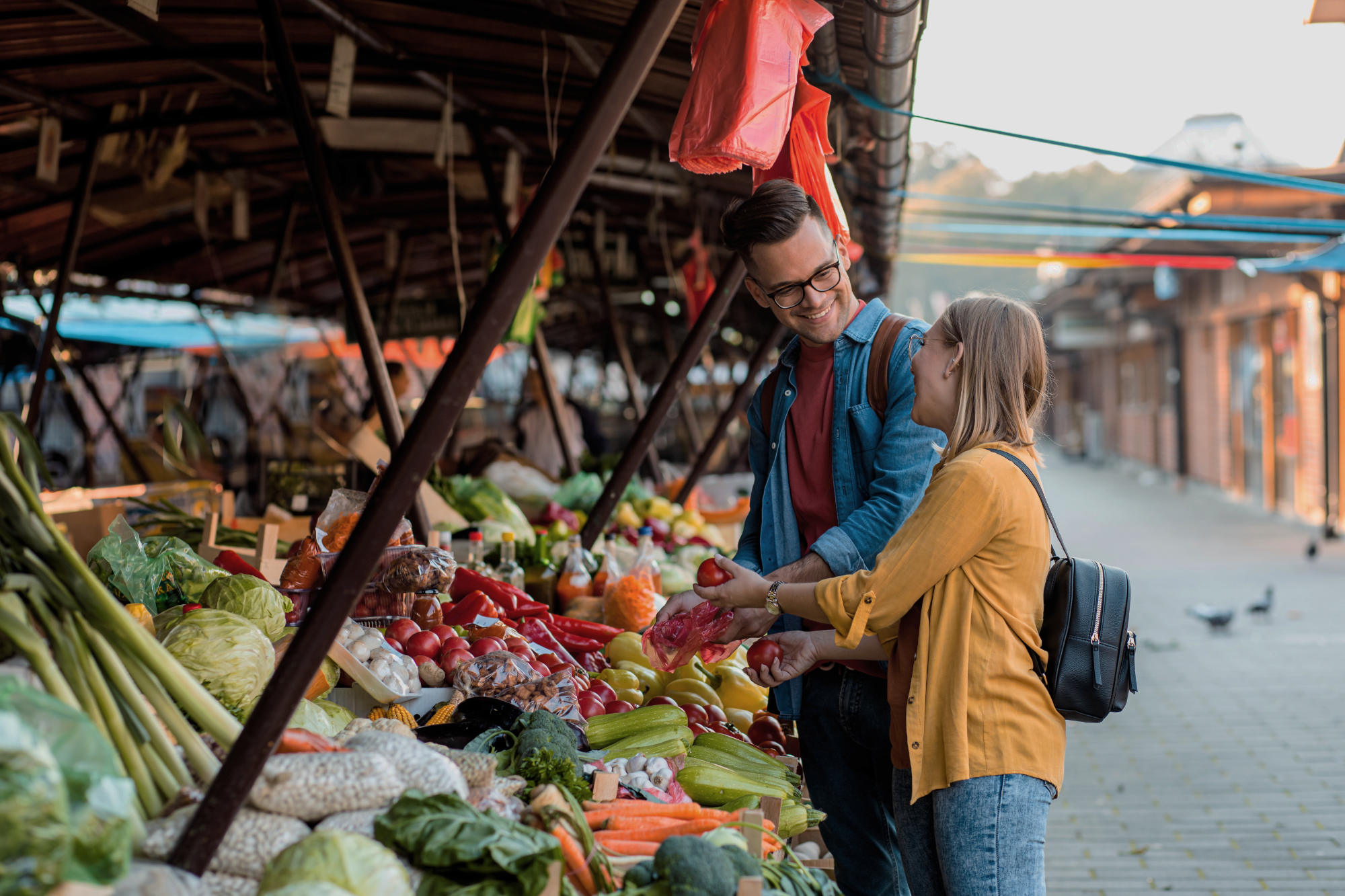
Local products Buy
What could be nicer than strolling through the local weekly market at your vacation destination in the morning, discovering new products and buying fresh fruit and vegetables directly from the producer? In addition, this avoids the import of products and thus also reduces CO2 emissions. You can even go without your beloved local specialties during a vacation. It also supports local businesses, which also contributes to sustainability - especially on a climate-friendly vacation.
Rationing food
Buying food consciously is particularly important when traveling by motorhome. Especially as the space available in most motorhomes makes it almost impossible to buy large quantities of food. It is therefore better to buy smaller quantities and, if necessary, draw up a meal plan for 3-4 days. In general, you should prepare food more consciously. Dishes that are only prepared in one pan or pot, for example, can help here. Or you can cook for 2 days in advance. This reduces the amount of washing up and saves a lot of water.
Waste disposal
The topic of waste is not only a big issue on vacation, but we are also becoming more and more aware of this topic in our everyday lives. If you are traveling with a motorhome, you should always be considerate of the environment and dispose of any waste accordingly. Disposal stations are available at rest areas, campsites and pitches for this purpose. Of course, it is not uncommon to find garbage on remote pitches. However, this does not mean that you should put your garbage there. Rather, this would be an incentive to improve your ecological footprint. How can you do this? Quite simply. Collect the garbage you find and dispose of it properly, even if it's not your own garbage. For the sake of the environment.
These are just a few points that can be easily and effortlessly integrated into your vacation with a motorhome. Making your vacation sustainable depends on the conscious behavior of each individual. Do you have any more tips for a climate-friendly vacation? Share them with us.


